

Adult Learning Doesn’t Have to Feel So Serious: The Power of the Inner Child in Training

Updated: Jun 15
Adult learning is often treated as something that must be serious.
The topic may be important. The audience may be professional. The goals may be tied to performance, safety, compliance, or technical accuracy. So naturally, many people assume the training itself should feel formal, controlled, and information-heavy.
But serious learning does not have to feel heavy.
Adults may bring experience, responsibilities, and professional expectations into the room, but they also bring curiosity, emotion, imagination, and a desire to succeed. When learning design speaks only to the “professional adult,” it can miss the full human being behind the job title.
This is where the inner child becomes powerful.
Not the childish part of us, but the curious part. The part that wants to explore, try, compete, laugh, solve problems, and feel proud of progress.
When training makes room for that part of the learner, participation becomes easier, practice feels less intimidating, and the experience becomes more memorable.
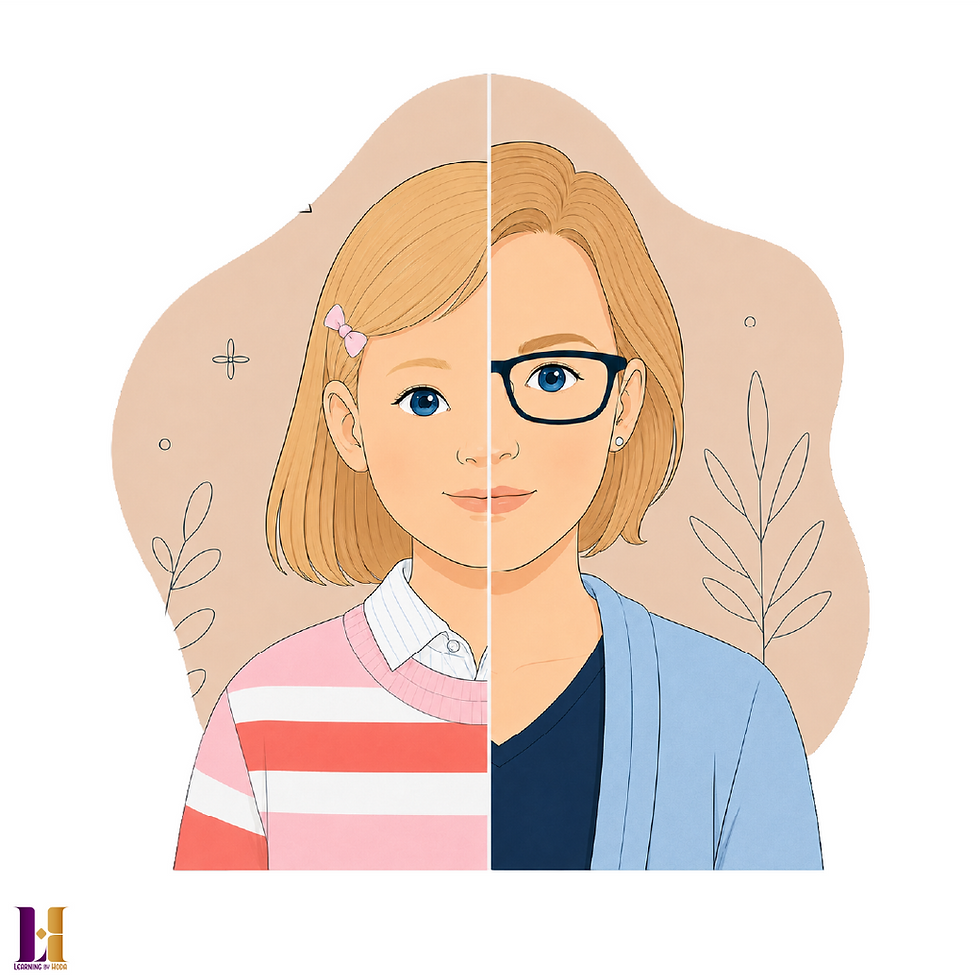
The Inner Child in Adult Learning
Somewhere along the way, many adults learn to separate work from play.
Work is serious.
Training is serious.
Learning is serious.
But play has always been connected to learning. Children learn by experimenting. They test ideas, repeat actions, make mistakes, try again, and celebrate small wins. They do not need to be convinced that practice matters; they naturally learn through doing.
Adults are not so different.
What changes is the fear.
Adults may hesitate because they do not want to look unprepared, give the wrong answer, or appear less competent in front of others. This fear can make them passive, even when they are interested in the topic.
Thoughtful activities reduce that barrier. They shift the focus from “Do I know the right answer?” to “Let me try this and see what happens.”
That small shift can change the entire learning experience.
Why Activities Make Workshops More Memorable
In workshops, activities are sometimes treated as extras: something added to make the session more enjoyable or to fill time between slides.
But a good activity is not a break from learning. It is the learning.
A scenario discussion helps participants apply concepts to real situations.
A role play gives them a chance to practice a difficult conversation.
A group challenge encourages problem-solving and collaboration.
A simulation allows them to see the consequence of a decision before facing it at work.
I have seen this many times in my own workshops.
In my Effective Communication workshop, I used activities that helped participants experience communication barriers instead of only talking about them. For example, when participants tried to give and follow instructions with limited information, they could immediately feel how easily meaning can be lost. The activity created laughter, but it also opened the door to a deeper conversation about listening, assumptions, clarity, and feedback.

In my Understanding Our Emotions workshop, I used reflection and body-mapping activities to help participants identify how emotions show up physically and how triggers can influence reactions. The topic was personal and sometimes sensitive, but the activities made it easier for participants to explore the subject in a safe and practical way.

These moments help learners process information instead of only receiving it.
They also create emotional anchors. People may forget the exact wording of a slide, but they often remember the moment they struggled with an instruction, recognized a feeling in their body, solved a challenge with a team, or laughed while learning something important.
That emotional connection is one reason the learning lasts longer.
How Gamification Brings eLearning to Life
The same principle applies to eLearning.
Without interaction, online training can quickly become passive: read, click Next, answer a quiz, repeat. Even when the content is valuable, the experience may not hold attention long enough to create meaningful learning.
Gamification can help when it is used with purpose.
Badges, progress bars, levels, points, challenges, and scenario-based choices can give learners a sense of movement. They show progress. They create anticipation. They encourage people to continue.
Competition can also be motivating when used carefully. A leaderboard, team challenge, or “beat your score” activity can add energy and focus. The goal is not to turn every course into a game, but to use game-like elements to support practice, feedback, and motivation.
In my own eLearning portfolio, I have used gamification to make technical and safety-related topics more engaging.
In my Dangerous Goods Hunt project, learners interact with a suitcase and use a magnifier-style experience to identify hidden dangerous goods. Instead of simply reading a list of prohibited items, learners search, discover, make decisions, and receive feedback. The activity turns compliance content into an active challenge.
In my Aircraft Weight and Balance project, learners work through fuel calculation challenges at different difficulty levels. The experience includes a game-like structure where learners calculate, submit answers, and see whether their decisions are correct. This makes a technical topic more interactive and gives learners space to practice problem-solving.
These examples show that gamification does not mean making learning less serious. It means giving learners a more active role in the experience.
At its best, gamification gives learners a reason to stay involved.
What Kahoot Taught Me About Serious Learners
One of the most interesting lessons I learned came from using Kahoot in technical aviation training.
At first, I wondered how a game-based activity would be received in a serious environment. I was working with audiences such as aircraft mechanics and flight dispatchers, where accuracy, safety, and technical knowledge matter deeply.
I expected some hesitation.
But the reaction surprised me.

Participants became engaged almost immediately. They wanted to answer quickly. They watched the leaderboard. They laughed. They competed. They paid attention to the explanations after each question. Even people who were usually quiet became more involved.
The content was still serious. The environment was still professional. But the energy in the room changed.
Kahoot did not replace the learning. It created momentum around it.
It helped participants review information, identify gaps, discuss misconceptions, and stay mentally present. It also created a shared experience, which can be difficult to achieve in technical training when learners are tired, busy, or overloaded with information.
That experience reminded me that adults do not stop enjoying challenge, recognition, and play just because they work in serious roles.
Sometimes, the more serious the environment is, the more valuable those moments of engagement become.
Mistakes Belong in Training
In the workplace, mistakes can be costly. In training, they can be useful.
A well-designed learning experience gives people a place to make decisions, test their judgment, and learn from the outcome before the real situation happens.
This is especially important in areas such as safety and technical training. Learners need more than information. They need opportunities to practice.
When a supervisor tries a feedback conversation in a role play, they can notice what feels natural and what needs improvement. When an employee works through a safety scenario, they can recognize risks without facing real danger. When a learner chooses the wrong response in an eLearning simulation, immediate feedback helps them adjust.
The mistake becomes part of the learning process, not a reason for embarrassment.
Playful Does Not Mean Childish
There is an important distinction between designing for the inner child and treating adults like children.
Childish training talks down to people.
Playful training invites them to participate.
Childish training adds games with no purpose.
Playful training uses interaction to support a learning goal.
Childish training ignores real-world context.
Playful training helps people practice for real situations.
The difference is intention.
A playful approach respects adult learners. It recognizes their experience while also creating space for curiosity, challenge, and discovery.
This is why activities, simulations, quizzes, games, and gamified elements need to be designed carefully. They should never be added only because they are fun. They should support the learning objective, connect to the real work, and help learners practice something meaningful.
Designing for the Whole Learner
If we want training to be memorable, we need to design beyond content delivery.
Yes, adults need relevance. They need clear objectives. They need practical tools they can use at work. But they also need to feel engaged enough to participate and safe enough to practice.
This can happen through simple but intentional design choices:
Start with a question instead of a definition.
Use realistic scenarios instead of abstract explanations.
Turn a quiz into a challenge.
Add reflection after an activity.
Let learners work together to solve a problem.
Use badges or progress markers to recognize effort.
Build in moments where learners can try again.
Use friendly competition to increase attention and energy.
These choices do not make the learning less professional. They make it more human.
Final Thought
Adult learning does not become stronger by removing joy from the experience.
It becomes stronger when learners are invited to think, try, question, compete, reflect, and practice in ways that feel meaningful.
The inner child is not a distraction from adult learning. It is the part of us that still knows how to explore.
And when learning design reaches that part, the experience becomes more than a session or a course.
It becomes something people remember.
If you are looking for training that is not only informative but also engaging, practical, and memorable, I can help.
At Learning by Hoda, I design learning experiences that combine clear structure, meaningful activities, real-world practice, and human-centered design.
Whether you need a training effectiveness audit, custom eLearning, instructional design support, or interactive workshops, my goal is to help your learners stay engaged and apply what they learn with confidence.
Explore my services here: https://www.learningbyhoda.com/services

Comments